











On May 3 and May 4, Commonwealth University — Bloomsburg presented its 15th Annual Dance Minor Concert, Healing Rough Waters.
The performance explored a range of heavy, deeply human themes — suicide, addiction, the difficult challenges of motherhood, and the search for a sense of home.
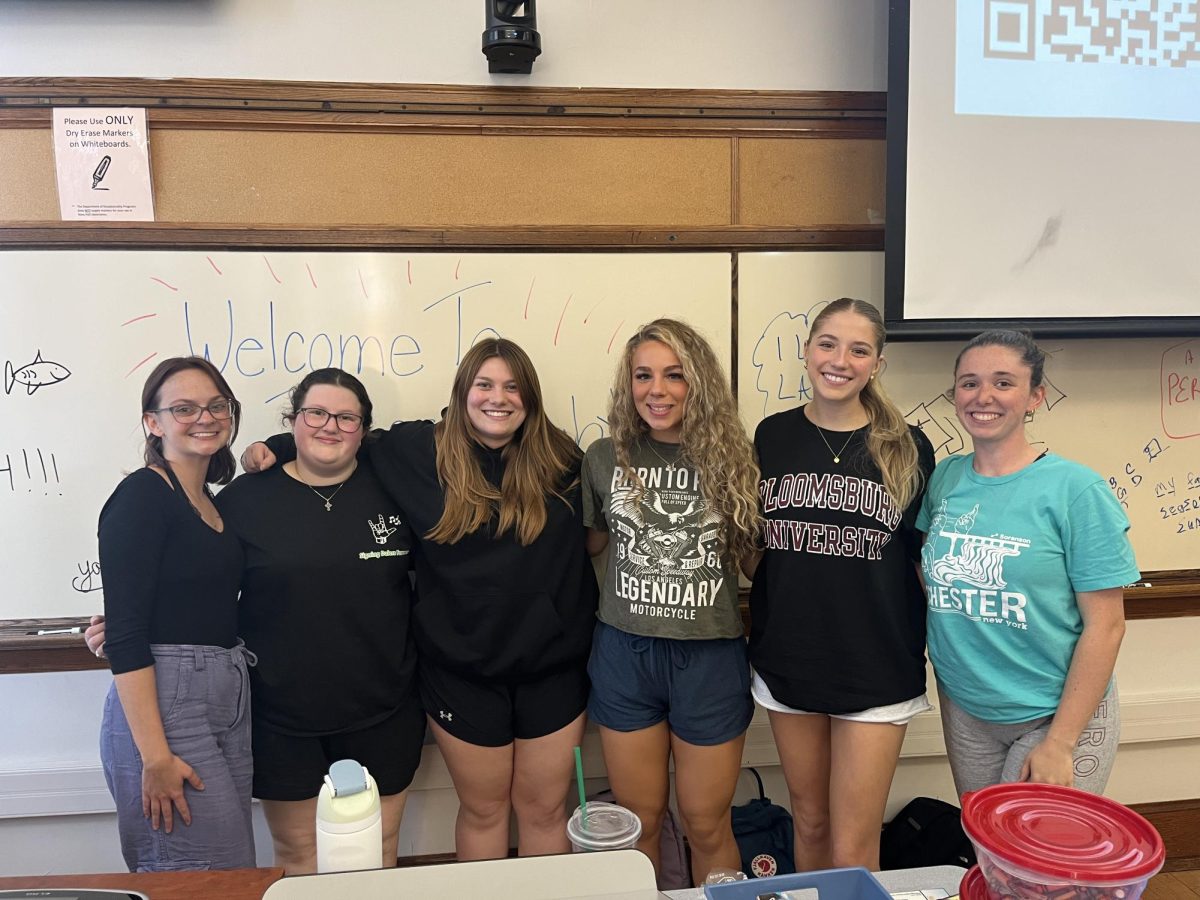
The concert was a result of a collaborative process between student choreographers — Christine Johnson, Cyal Nelson, Caitlyn Ritz, Brianna Tommasulo, Emma Sperr — and their mentor, Julie Petry.
While each choreographer brought a unique vision to the table, the group worked together to shape a cohesive production.
There were differences in visions but everyone was able to collaborate effectively to bring the show to life.
Beyond choreography, several creative elements played a crucial role in shaping the performance.
Student costume designer, Mickey Brathwaite, described one of the biggest challenges as making the performers appear “human” rather than traditionally “like a dancer.”
“We found this way to combine the designs … so they had this puzzle-piece aspect,” they explained, “while still feeling abstract and connected to the story.”
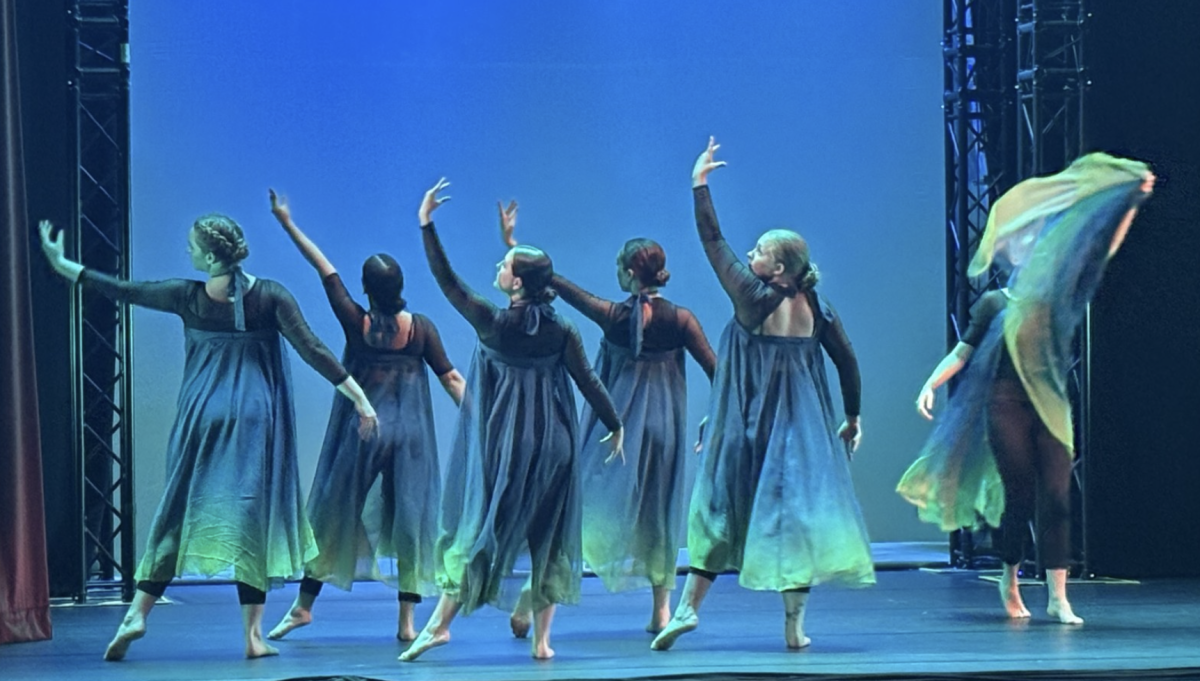
Costume details — such as an angelic garments and flowing skirts — were used to reflect themes of loss and transcendence.
In contrast, other pieces featured restrictive, shredded designs to represent intrusive thoughts. “The costumes were extremely restrictive, as if they were holding someone back,” they said, “to visually display anger and intensity.
Lighting designer, Zach Ridall, emphasized the importance of guiding the audience’s attention and emotional response. “A fundamental aspect of their process is directing the audience’s eyes and influencing their mood primarily through the use of color,” they explained.
Lighting designer, Asher Upright added, “You get to experiment with visibility, form, shape, texture, and distribution.”
Each piece in the convert stood on its own, with no two performances feeling alike. The originality of each choreographer was evident on stage.
For student choreographer, Cyal Nelson, their piece was deeply personal, inspired by the loss of a friend to suicide. Through movement, props, and lighting, they translated their grief into performance. “The way I move my body and show the emotion on my face can portray different types of stories,” they said.
They also expressed a desire for their work to be recognized beyond personal identity. “I’m sure there are people who don’t know who I am, but I want them to look at my art and see the value in it.”
Student choreographer, Brianna Tommasulo, aimed to raise awareness about mental health and encourage audiences to seek help. “It’s not too late to get help,” they said, emphasizing the ripple effects of losing someone to suicide. “Truly talk to people. Don’t think that no one understands what you are going through — there is someone who does.”
Student choreographer, Caitlyn Ritz, explored the idea of belonging in their piece Finding Home. “I want people to understand that your home isn’t defined by four walls around you,” they said. “My home is people.”
Mentor, Julie Petry, choreographed both the opening and closing numbers, framing the show with powerful imagery. The opening piece drew inspiration from environmental themes. “I wanted to capture the human experience — how we constantly go through ‘oil spills’ in our lives,” she explained. “We have to live with the consequences, manage the cleanup, and still keep going. But sometimes, those spills build up.”
The final piece tackled the difficult realities of motherhood. “There’s no personal time, no downtime,” she added.
Petry also reflected on broader societal expectations. “The current climate often pushes the idea that everyone should start a family. I want people to understand if they make that choice, it’s not always a ray of sunshine all the time — it’s very demanding.”
The dedication behind the scenes was evident in every moment of the performance. Dancers maintained rigorous rehearsal schedules, rescheduling any missed practices and consistently checking in with their mentor.
Many pieces evolved significantly from their original concepts to final production. In the final number, all five dancers were initially meant to perform the same motion — holding and rocking a baby.
However, after seeing it on the stage and in a bigger space, Petry felt the message needed an adjustment. Instead, two performers dropped their arms mid-piece, symbolizing a change of heart and adding a new layer of meaning to the choreography.
Ultimately, the concert revealed that the real work happens long before the curtain rises — and that dedication, collaboration, and honesty are what bring a performance to life.