

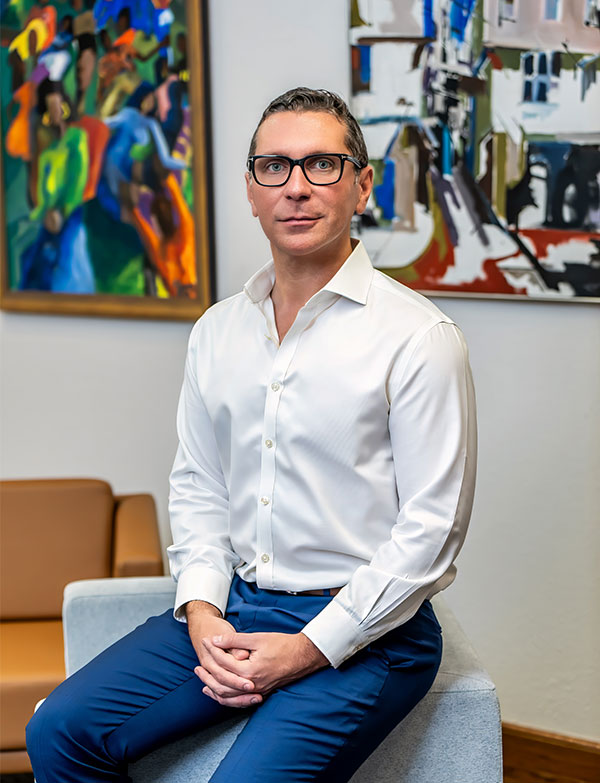











Interim President Jeffrey Osgood says Commonwealth University is facing the most serious financial instability in the State System. It’s so severe that without significant improvements, the institution could run out of cash next year.
In an interview, Osgood stated that the financial foundation he inherited from the previous administration is “woefully inadequate.” He said he was aware before taking the position that both integrating universities, PennWest and CU, were in “significant financial distress,” but the extent of the shortfall became clearer once he arrived. CU is classified as a Plan 3 university, the State System’s highest level of financial instability. It is also designated at the highest level of financial exigency, which triggers closer oversight from the chancellor’s office.
“If we find ourselves not getting the improvements I’m advocating for, we will be out of cash next year,” he said. In that scenario, the university would be forced to request a loan from systemwide reserves.
How the crisis developed
Osgood attributes the current situation to several interlocking issues, including a flawed state allocation formula, overly optimistic enrollment projections, and what he called a “catastrophic” scholarship strategy implemented before he arrived.
The State System distributes a little more than $600 million among its universities using a formula heavily influenced by enrollment. After the integration of the formula applied a 33% “integration reduction factor” to core operating costs, an assumption that integrated universities would save one-third of their expenses.
“There’s no data to support that,” Osgood said. “Our best assessment is 10%. If the factor were closer to that, we would receive $10 million more per year than we do now.”
He also criticized the prior administration’s approach to scholarships, which he said overcommitted resources the university could not afford. “It significantly whittled away our reserves,” he said. “It generated enrollment, but only because we were giving away cash we didn’t have.”
Impact on students and employees
“I’m desperately trying not to furlough or lay off people,” he said. Instead, the university is relying on attrition, allowing positions to disappear as employees retire or resign. This has created uneven gaps across departments, making scheduling and staffing more complicated.
Students have also felt the effects of budget pressures, particularly in course availability and modality. Many students have expressed frustration with the number of online or multimodal courses offered across campuses.
Osgood said he plans to work with the provost and deans to increase face-to-face offerings at Mansfield and Lock Haven and eventually publish two-year course schedules so students can plan effectively. He acknowledged that program cuts are likely. “We can’t offer every program at Mansfield, Lock Haven, and Bloomsburg,” he said. He emphasized that any current student will be able to finish their program, but new admissions may close in programs with low enrollment. Fee increases are also likely. “We need to own that,” he said, adding that any increases must come with “tangible benefit” for students.
The Path Forward
Osgood identified several priorities for stabilizing the institution: balancing the budget, rebuilding reserves, and addressing deferred maintenance across campuses. Long-term, he hopes for a budget surplus that would allow reinvestment in buildings, academic programs, and student support. He said that real progress will require changes beyond the university, especially in state-level policy. His three major requests are for the State System to revise the allocation formula, for the legislature to provide additional funds to pay down university debt, and for the institution to continue finding ways to use existing resources more efficiently.
Despite the grim financial outlook, Osgood emphasized his commitment to the university community. “Students are at the center of every decision we make,” he said. “I’m working hard to make sure this is the worst it gets. If we can get help on the finance side, it’s only up from here.”