
















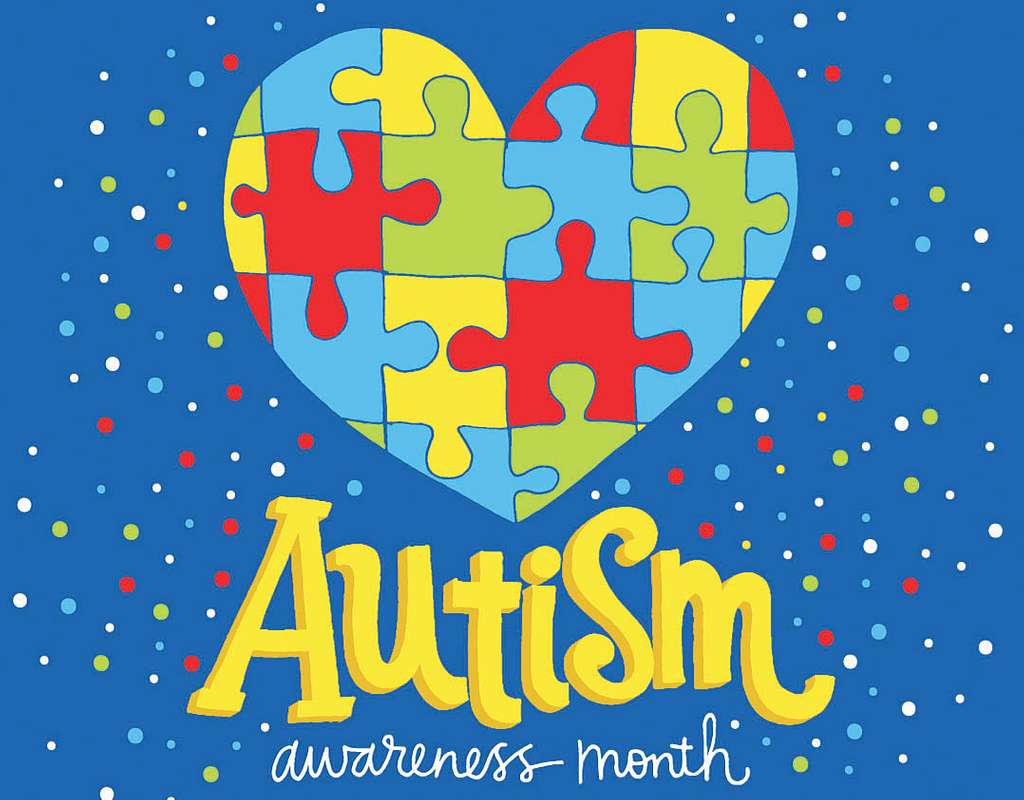
Autism is something that gets talked about so much in our current society, and yet very few people know the actual impacts it has. I have high-functioning autism, officially diagnosed, and very few people register all the ways it impacts daily life. April is Autism Awareness Month, and I want to break down what that actually looks like from the inside.
The Invisible Disability
The first thing that comes to mind is that it is invisible. Unlike an inability to walk or other physical disabilities, autism lives in my brain. People even when knowing I have it don’t register it as something I cannot control. When a person with a physical disability affecting their mobility is unable to perform certain tasks, others accommodate them naturally. But when it comes to autism, that same standard doesn’t always follow. When someone with higher-functioning autism demonstrates an inability to pick up on social cues, the moment is often treated as them being weird or the problem, as opposed to their illness causing the miscommunication. That’s one of the most consistent and least talked about realities of living with it.
That lack of understanding of social norms plays out in every part of life. For most people, unwritten rules about eye contact, tone, personal space, and conversation flow get absorbed naturally growing up. For a lot of autistic people, those rules have to be actively studied and consciously acted on in real time. It’s a layer of mental work that doesn’t show on the outside, and because it doesn’t show, people often don’t think to account for it.
The Connection Between Autism and Identity
There are also some things connected to autism that don’t come up much in the general conversation. Fun fact: people with autism are more likely to come out as queer. The reason ties back to that same separation from social norms. When you’ve spent your whole life noticing that social scripts don’t quite fit you, you tend to disconnect more from the assumptions of the world surrounding you, including assumptions around sexuality and identity. That separation from what’s considered the default is something a lot of autistic people experience across multiple areas of life, not just socially.
Strengths and Struggles
That different way of processing the world can also connect to larger range of IQ in a lot of cases, because it is a completely different approach to thinking altogether. Pattern recognition, hyperfocus, and unconventional problem solving are all traits that come from the same wiring that can make certain social situations feel overwhelming. The strengths and the struggles come from the same place.
The Case for Neurodiversity
While cultural diversity is talked about constantly, neurodiversity is rarely treated with that same value, even though in a lot of major aspects, that different approach can be genuinely beneficial. The ways autistic people think and process information contribute something real to classrooms, workplaces, and communities, and that tends to get overlooked in a conversation that focuses mostly on limitation.
What a Diagnosis Actually Changes
Being officially diagnosed gave me language for experiences I’d had my whole life without fully understanding. It didn’t change anything about how my brain works, but it changed how I could talk about it and how I could explain it to other people. That part matters, because a lot of autistic people, especially those who are higher functioning, go a long time without a diagnosis, which means they go a long time without any framework for why certain things are harder for them than they seem to be for everyone else.
So this Autism Awareness Month, think and reflect on how you treat people with this different ability. It’s important to notice both the strengths it can provide and the struggles it can cause for those who have it.