
















On Feb. 13th, the newest adaptation of Wuthering Heights reignited conversation around one of literature’s most debated love stories. Rather than attempting to fully replicate the novel by Emily Brontë, the film stands on its own, asking the audience to experience the story as an emotional journey rather than a direct translation.
Directed by Emeral Fennel, the film is not a careful recreation of the novel but an interpretation — one that reshapes the familiar story into something more intimate and emotionally driven. Rather than attempting to bring every detail of the book Wuthering Heights directly to life, Fennel focuses on the emotional core of Catherine and Heathcliff’s realtionship, allowing the film to stand apart as its own experience.
While in differs in tone and structure from the novel, this version’s willingness to interpret rather than imitate makes it a compelling adaptation in its own right.
The audience is not told what the characters feel. Instead, we are asked to witness through gestures, silence, and memory. This shift makes the story feel less like an account being retold and more like a lived experience unfolding in real time. Though some viewers may find the differences jarring, I found that this interpretation allowed the central relationship to feel more personal and human.
By focusing on missed chances, social pressure, and the consequence of silence, this interpretation of Wuthering Heights presents the narrative as inevitable and deeply human — a tragedy shaped by destiny, yet worsened by the characters’ inability to truly communicate.
The story follows Catherine Earnshaw and Heathcliff, whose connection feels fated from the beginning, as though their lives are bound together regardless of circumstance. However, Catherine’s decision to accept Edgar Linton’s proposal creates a fracture that cannot be repaired.
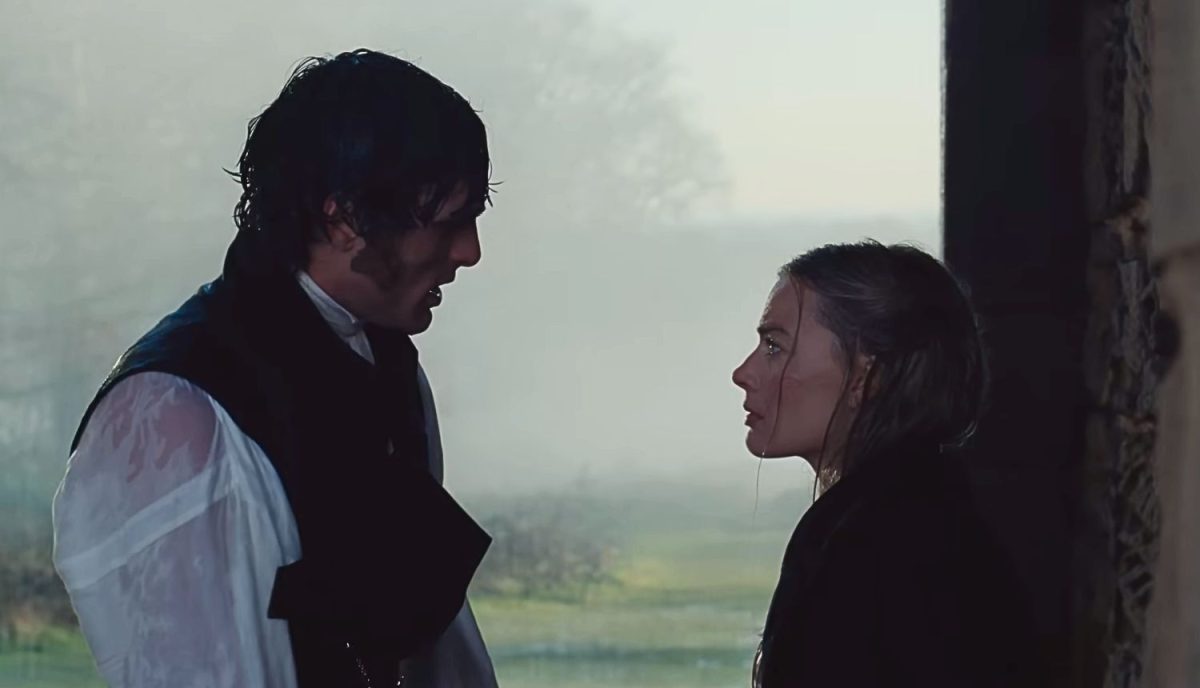
Heathcliff, overhearing only part of her reasoning, believes himself rejected and leaves without speaking a word. This moment, built on misunderstanding rather than malice, becomes the catalyst for everything that follows.
During Heathcliff’s absence, the film portrays Catherine not with dramatic displays of grief but with a quiet heaviness. Her stillness displays someone living with a choice she cannot undo. The absence of emotional outbursts makes her regret feel more real, emphasizing that she is not simply heartbroken — she is also stuck between the life she chose and the one she truly wanted.
When Heathcliff returns years later, their reunion carries the weight of something that always seemed meant to be. There is a sense of destiny in their connection, as though time and separation could never fully sever it. Yet that same destiny cannot restore what was lost. Their love, though still powerful, is now entangled with pride, resentment, and the years they spent apart.
The film’s most devastating turn comes with Catherine’s decline and eventual death. Her fate underscores the story’s central message: words left unsaid can become permanent. If Catherine and Heathcliff had spoken honestly in that first moment — if they had listened rather than assumed — the course of their lives might have been different. Instead, their silence allows misunderstanding to grow into irreversible loss. By the time truths are confessed, there is no time left to change anything.
This adaptation suggests that while their bond may have been destined, tragedy did not have to be. Fate may have brought them together, but human hesitation kept them apart. The film presents love not as something defeated by external forces alone, but as something fragile that requires courage, honesty, and immediacy.
The emotional impact of the film lies in its restrained atmosphere and deliberate pacing. Scenes unfold slowly, allowing the audience to realistically feel the passing of time and the accumulation of regret. Rather than dramatizing every emotion, the film lets moments linger, mirroring how the characters themselves linger in indecision.
One of the film’s strongest departures from the novel is its emphasis on how Catherine and Heathcliff express love through actions rather than words. They rarely verbalize their feelings, yet their bond is constantly visible — in shared glances, physical closeness, and their inability to fully separate from one another even when their circumstances demand it. The film shows that their connection was never something that needed to be declared — it simply just existed.
One of my favorite moments in the movie was the emotional and moving montage near the end, which reflects on their childhood and the years they spent growing up side by side. By revisiting these moments after Catherine’s death, the film reminds the audience that their relationship was formed long before pride, class, or misunderstanding intervened. Their love is shown as something rooted in familiarity and shared history, not just passion. The montage reframes their tragedy by emphasizing how much of their lives were intertwined from the very beginning.
The most heartbreaking moment comes in a quiet childhood scene: Catherine and Heathcliff lie together in bed, still young, feeling doomed and hopeless. Believing she is asleep, Heathcliff whispers that he will always love her. He closes his eyes, unaware that Catherine is still awake. She smiles softly — she heard him all along. It is a small moment, but it captures everything the film argues about their relationship: the love was always there, deeply felt yet rarely spoken aloud. That realization, placed at the end, underscores how different their lives might have been if they had expressed those feelings openly when it mattered most.
By focusing on these unspoken emotions, the film transforms the story into a portrait on timing and communication.
In choosing interpretation over replication, this adaptation offers a new lens through which to view a familiar classic. It reminds audiences that love is not only about intensity, but about the courage to speak before the moment passes.
Ultimately, Wuthering Heights is a story of love, loss, and the danger of waiting too long to speak. We often assume there will be another chance to explain, to apologize, or to confess what we feel. This film challenges that assumption, reminding viewers that time is not always forgiving. Love may feel destined — but it is not immune to silence.
In the end, the tragedy is not that Catherine and Heathcliff loved each other — it is that they waited, and that waiting cost them everything.
I highly recommend taking a trip to the theatres and experiencing the film for yourself firsthand. I can assure you, you will not regret it. Just don’t forget the tissues like I did.